S
Loading
Loading
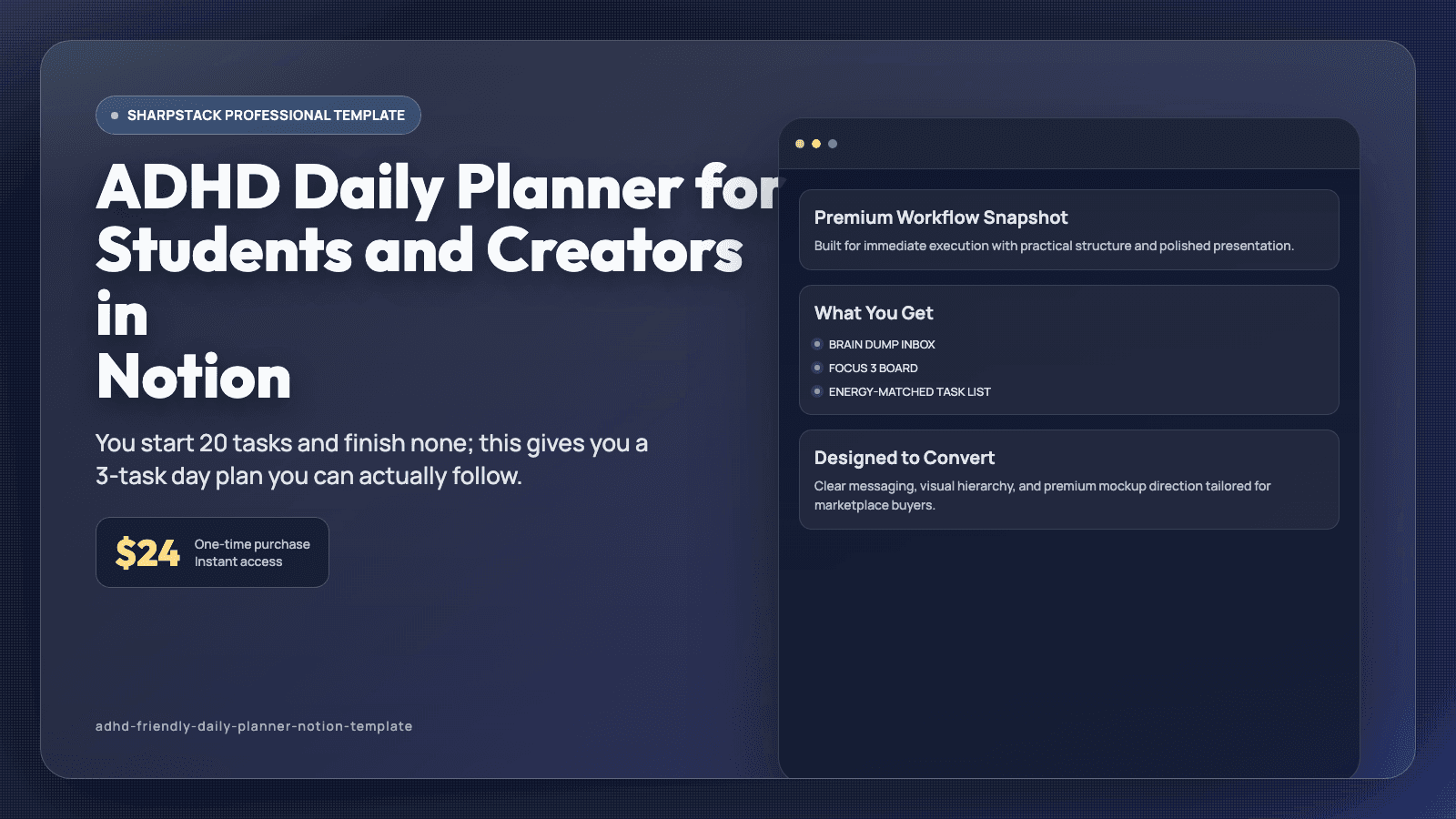
You start 20 tasks and finish none; this gives you a 3-task day plan you can actually follow.
You sit down to plan your day, then lose twenty minutes deciding where to start. Your to-do list is a wall of tasks, every item feels urgent, and one interruption can derail your whole plan. By afternoon you are switching tabs, half-finishing things, and feeling behind even though you worked all day. Most planners assume you can estimate time perfectly and stick to rigid time blocks. When that falls apart, you blame yourself instead of the system.
This Notion template is a daily planning workspace built for ADHD brains and changing energy levels. It includes a Brain Dump inbox, a Focus 3 board, an Energy-Matched Task list, a Time Anchor timeline, a Distraction Parking log, and a Daily Reset page. Each section uses simple fields so you can move from mental clutter to one clear next step in minutes. You are not forced into strict hour-by-hour scheduling. You choose what matters, then shape the day around how your brain works today.
Open Brain Dump and capture every thought in one list, then tag each item by context, urgency, and effort. Drag three tasks into Focus 3 and turn them into clear next actions with estimated effort and start triggers. Use the Time Anchor timeline to map your day around fixed events like classes, calls, meals, or commute so you stop overbooking yourself. When random ideas pop up, drop them into Distraction Parking without leaving your current task. Finish with the Daily Reset checklist so tomorrow starts with a clean page instead of leftover chaos.
After thirty days, you are not guessing what to do at 9 AM. You have a repeatable planning rhythm that cuts decision fatigue and helps you finish important work more often. You see fewer abandoned lists, fewer panic evenings, and more days where your priorities actually get done. This gives you structure that supports your attention instead of fighting it. You can start with the ready-made views on day one, then adjust labels and fields as your process evolves. Because related pages are connected, one update remains visible across linked views and prevents duplicate tracking. That means fewer missed details during busy weeks and a routine you can keep using long after setup.
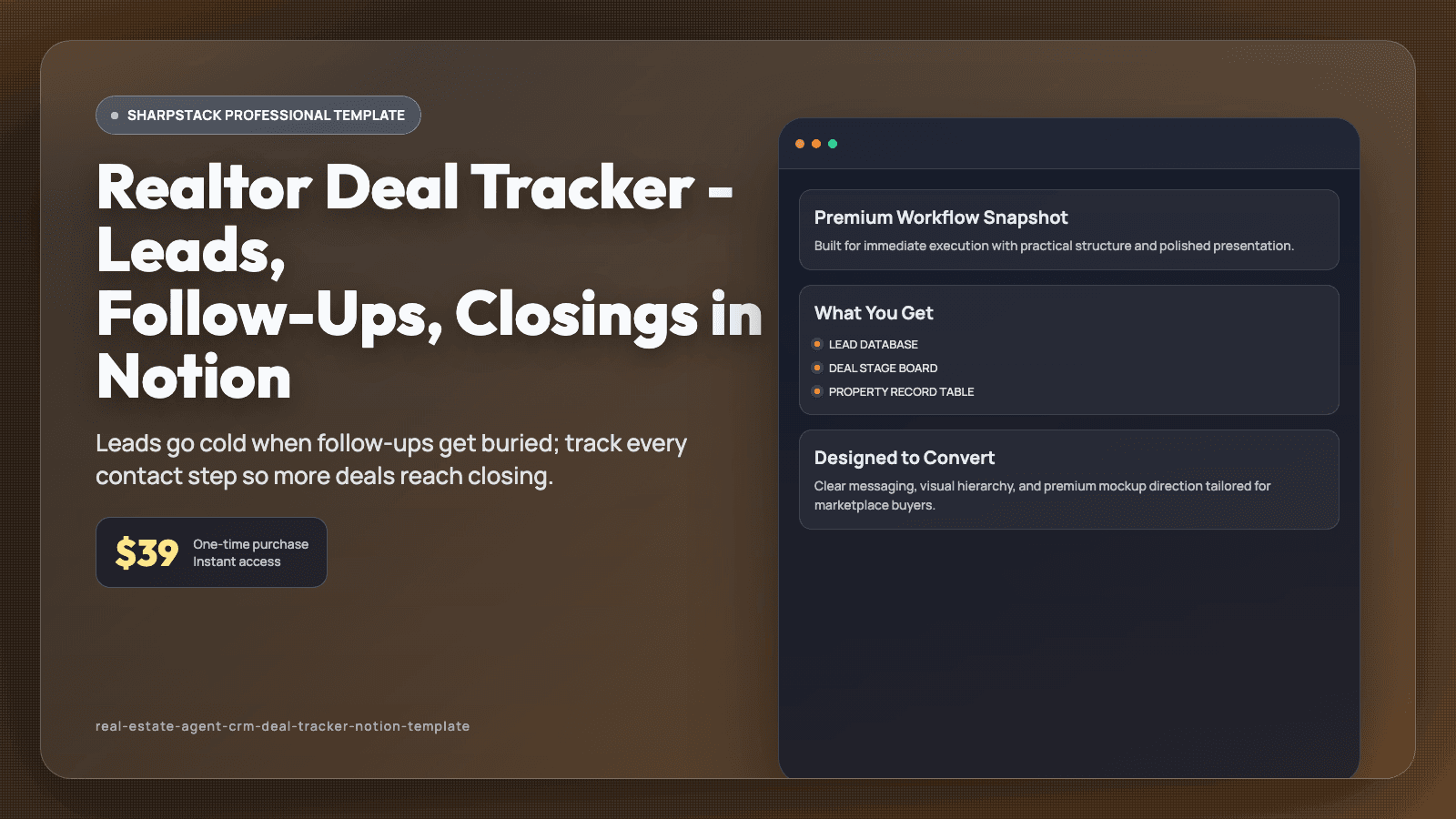
Leads go cold when follow-ups get buried; track every contact step so more deals reach closing.
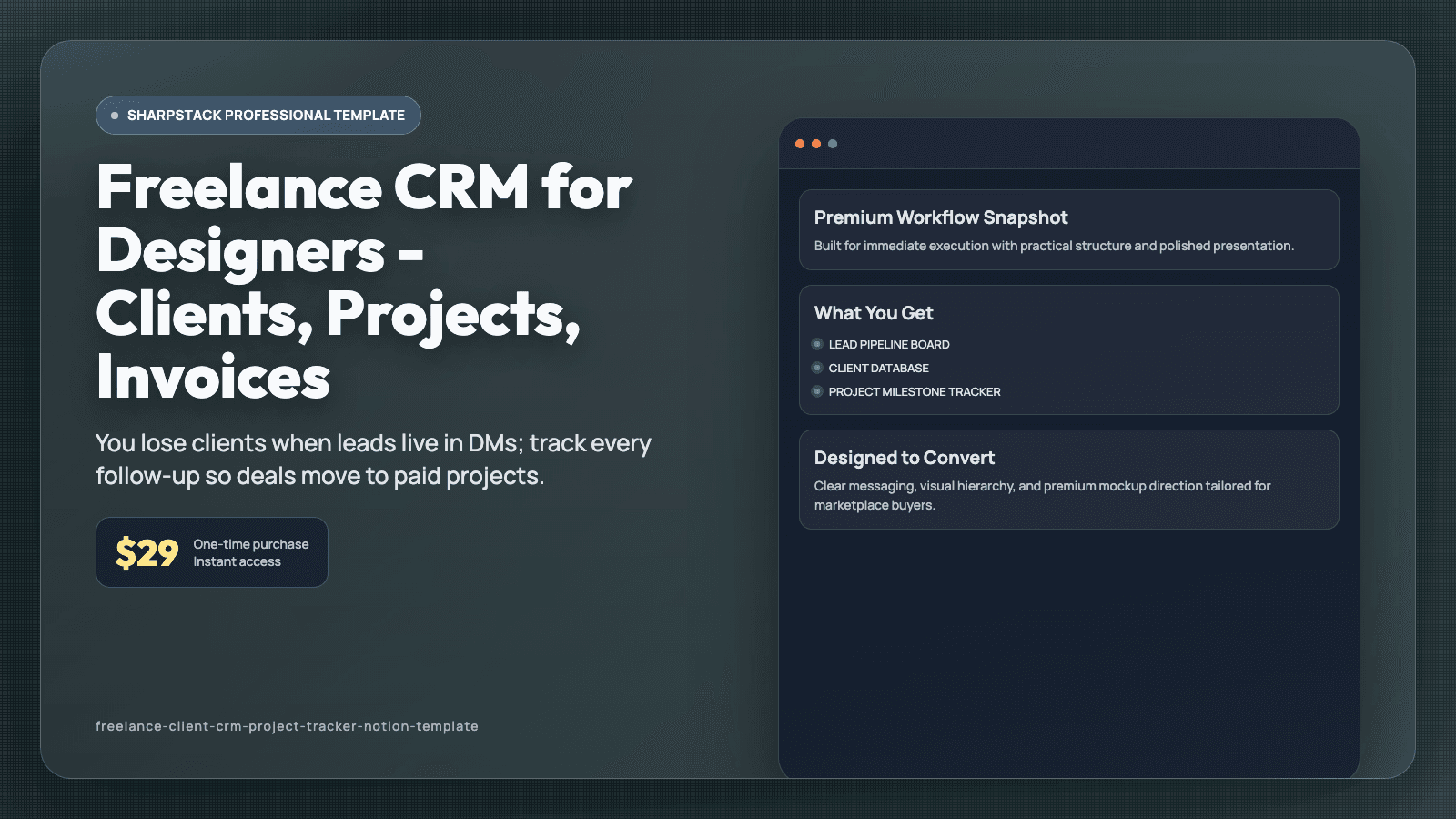
You lose clients when leads live in DMs; track every follow-up so deals move to paid projects.
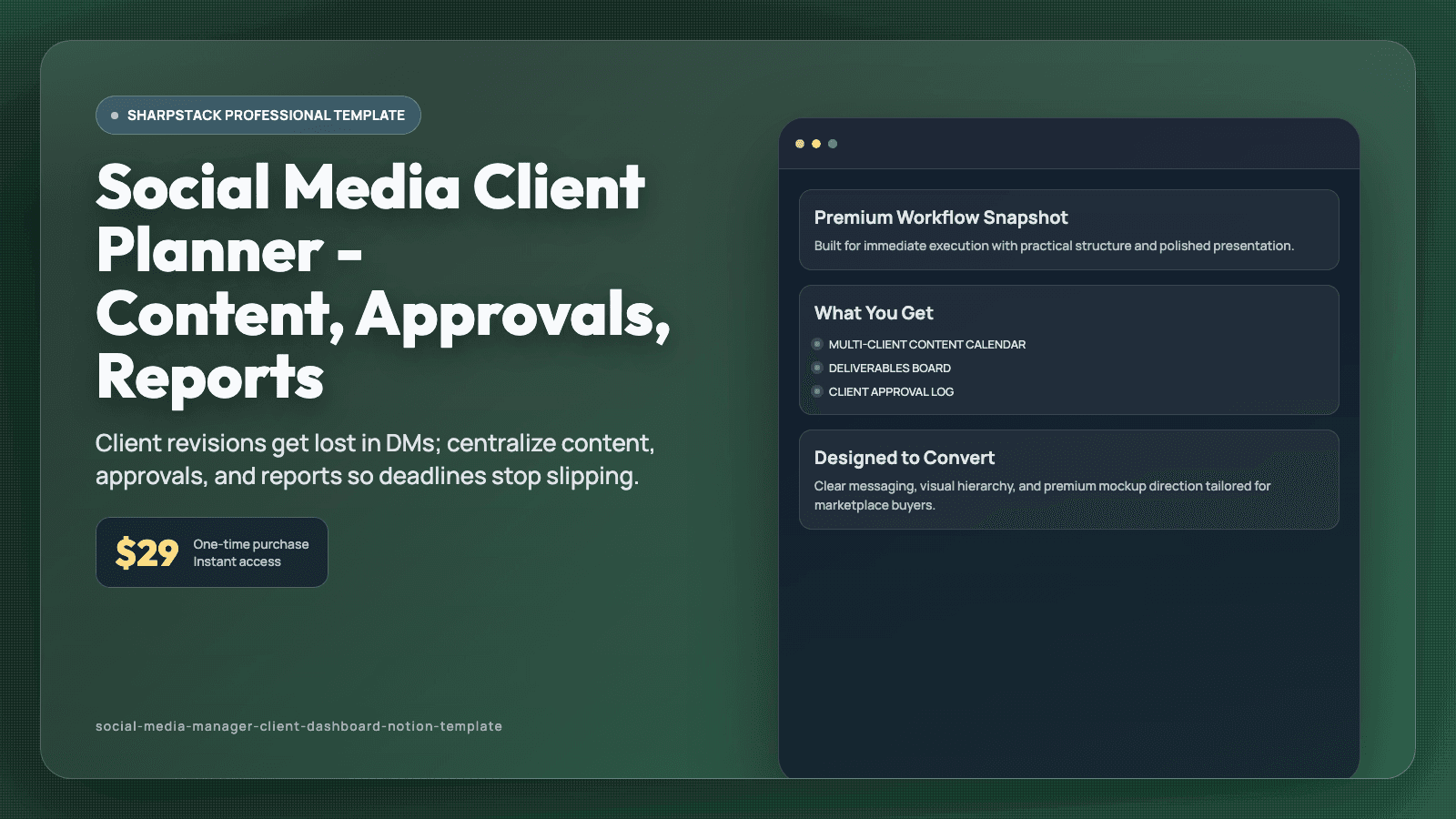
Client revisions get lost in DMs; centralize content, approvals, and reports so deadlines stop slipping.