S
Loading
Loading
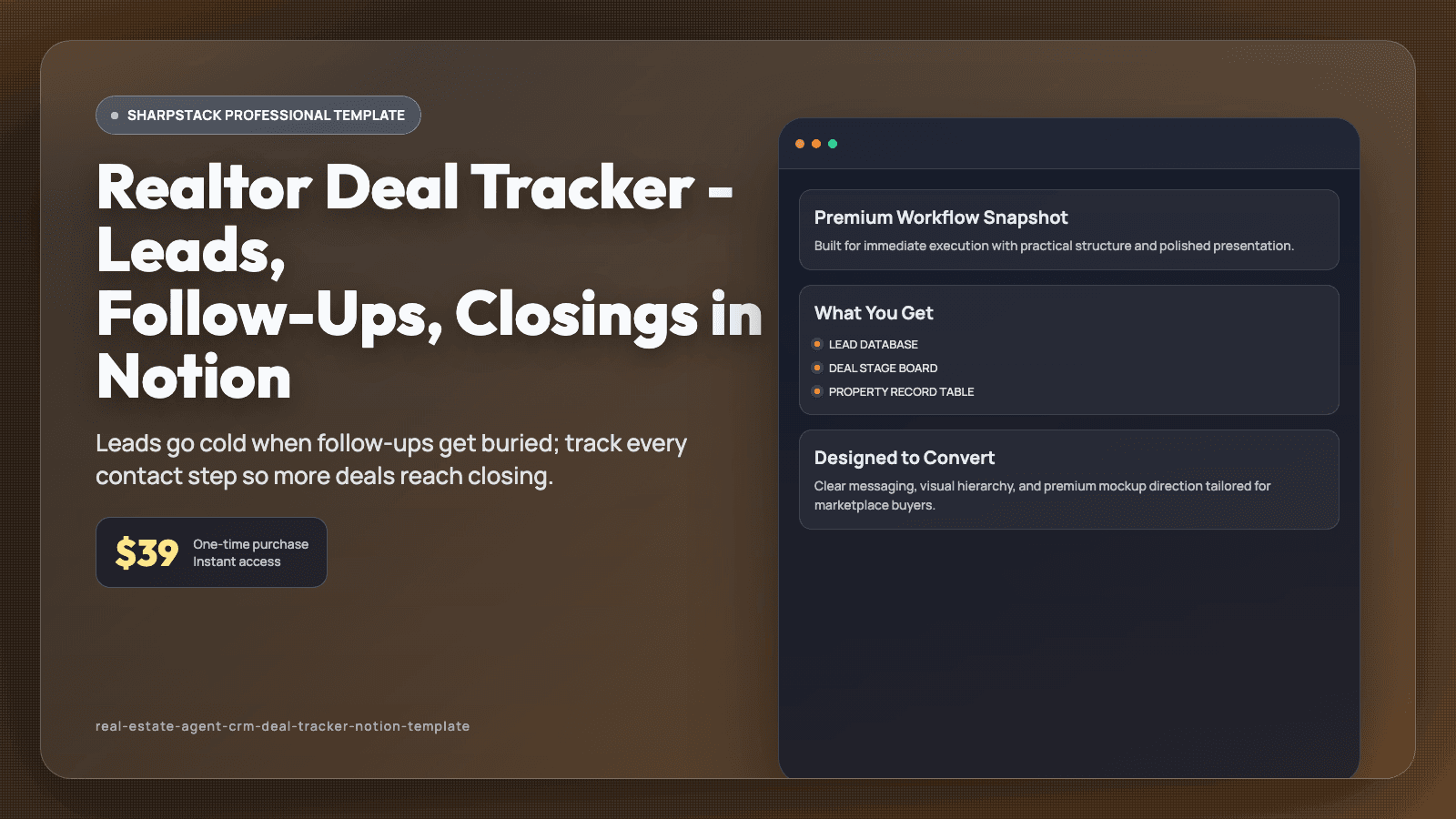
Leads go cold when follow-ups get buried; track every contact step so more deals reach closing.
You get leads from referrals, ads, portals, and open houses, but they land in different places. You call someone once, promise a follow-up, then miss the timing because your day gets busy. Property details sit in one app, client notes in another, and your deal stages live in your head. By the end of the week, you are unsure which opportunities are hot and which are fading. That uncertainty costs closings.
This Notion template is a realtor workflow built for agents who need tight pipeline control. It includes a Lead Database, Deal Stage board, Property record table, Follow-Up queue, Appointment Log, Offer tracker, and Commission snapshot dashboard. Each deal card keeps contact history, property details, budget range, and next action in one place. You can open one page and see exactly where every active opportunity stands.
Add new leads with source, buying timeline, price range, and next contact date in under a minute. Move deals through New Lead, Contacted, Showing Scheduled, Offer Sent, Under Contract, and Closed with simple drag and drop. Log calls, texts, and meeting notes in the contact timeline so nothing gets lost before your next conversation. Track offers with amount, date, and response status, then estimate commission directly on closed deals. Use the Today Follow-Ups view each morning to clear overdue actions first.
After thirty days, your pipeline feels less reactive and more controlled. Fewer leads fall through cracks because next actions are visible every day. You can forecast potential commission with better confidence and spend your time where the highest-value deals are moving. This gives you cleaner execution without adding another complicated tool. You can start with the ready-made views on day one, then adjust labels and fields as your process evolves. Because related pages are connected, one update remains visible across linked views and prevents duplicate tracking. That means fewer missed details during busy weeks and a routine you can keep using long after setup. A short daily check-in is usually enough to keep priorities clear, even when your week gets noisy. Each database includes practical defaults, so setup takes minutes instead of a full weekend rebuild.
You start 20 tasks and finish none; this gives you a 3-task day plan you can actually follow.
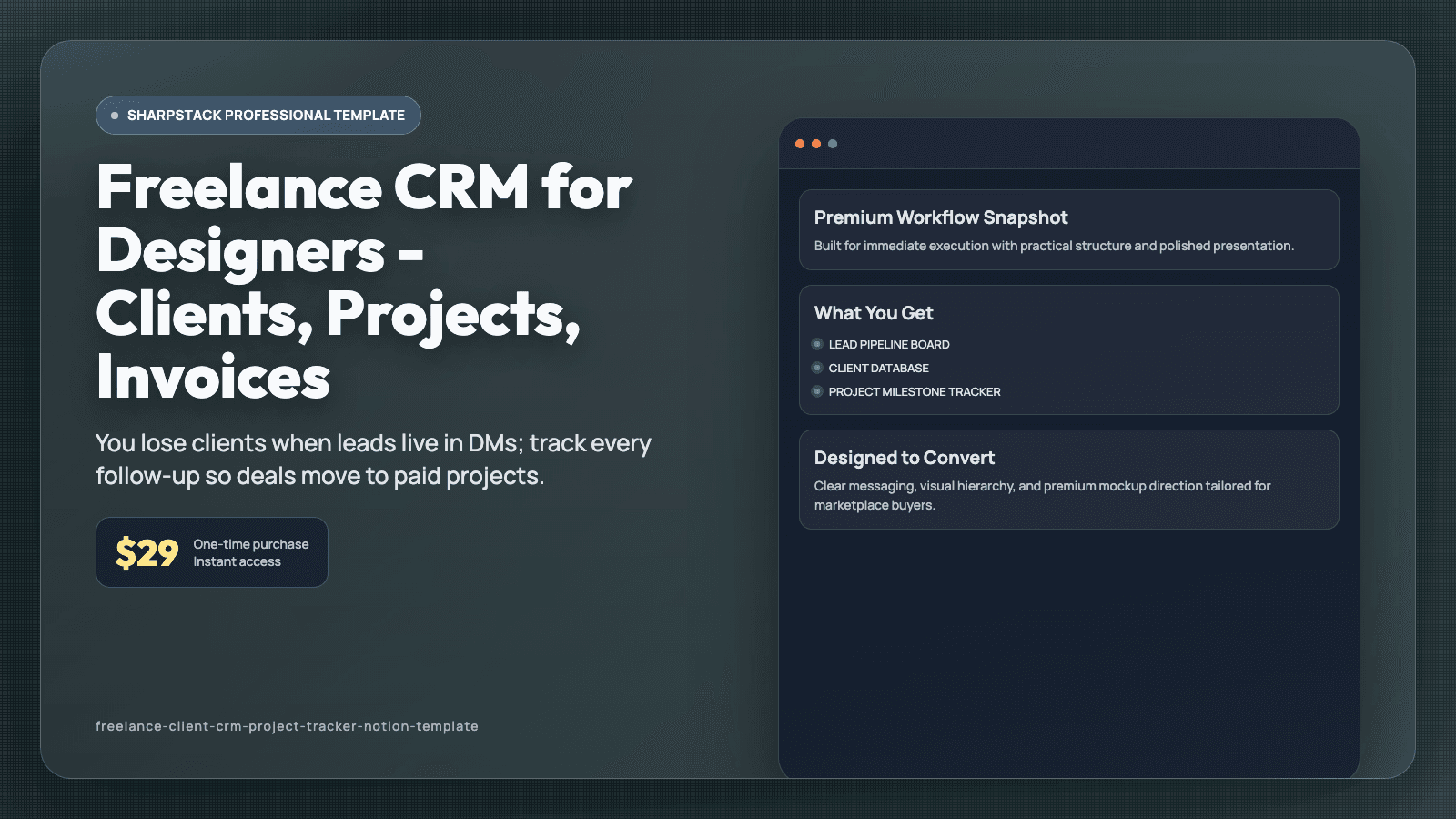
You lose clients when leads live in DMs; track every follow-up so deals move to paid projects.
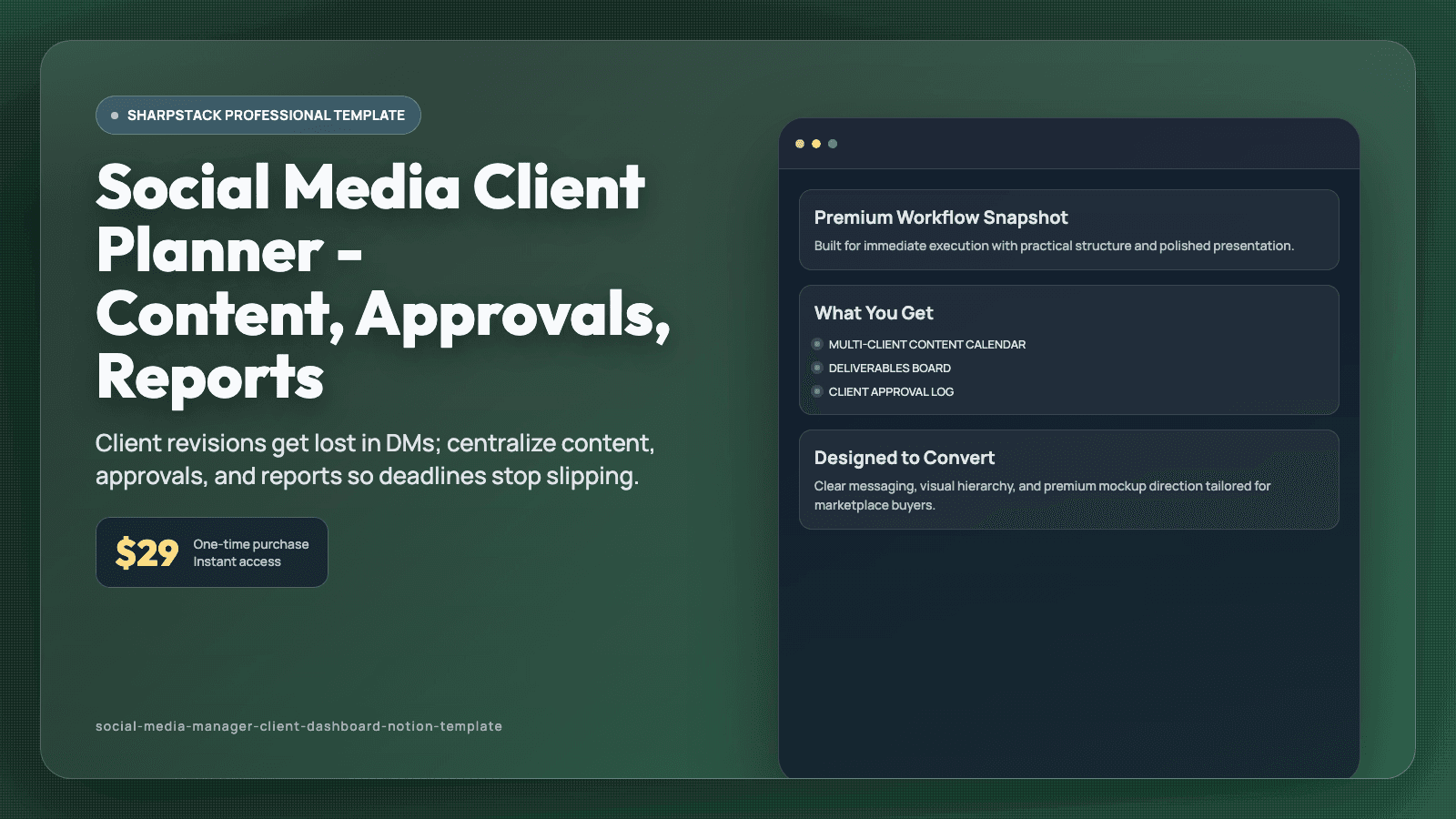
Client revisions get lost in DMs; centralize content, approvals, and reports so deadlines stop slipping.